


3D building modeling: estimating network loads on industrial frames
Evaluating the feasibility of installing solar panels on industrial rooftops requires flawless structural knowledge. For this 50,000 m² project, the primary challenge was to precisely quantify the current weight loads to validate the facility's photovoltaic potential. Through an exhaustive 3d building modeling process, IMAG'ING provided the structural engineering firm with reliable data to verify weight capacity and carry out their load calculations. Discover our technical approach.
How does dimensional measurement work in operational plants?
Our multidisciplinary team performed the complete digitization of the structural steel framework. Operating on a 50,000 m² industrial facility while production is active is a technical challenge that we safely master using our 3d scanning in constrained environments methodologies. The high-density point cloud obtained served as the raw database for the subsequent steps.
The objective was not merely to scan the structure, but to thoroughly map out every suspended item. From this reality capture, our modeling experts built a highly detailed 3d building modeling framework, including cable trays and over 63 km of piping. This extreme accuracy is essential to transform an unorganized point cloud into a fully structured, actionable engineering model.
A high-precision control without moving your machine tools
Once the geometry was locked, the digital twin became the central hub to evaluate the load distribution on the existing metal structure. By identifying the exact positioning and weight specifications of the networks supported by the roof frame, we provided a perfect map of the existing conditions.
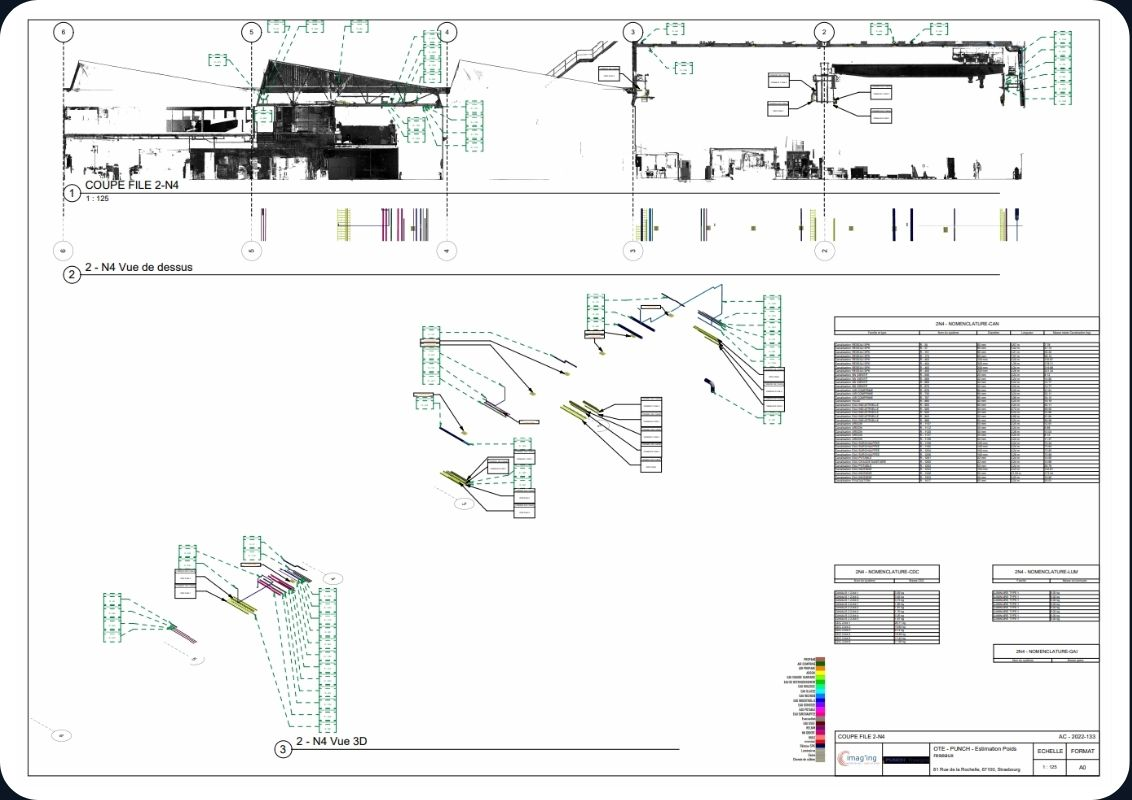
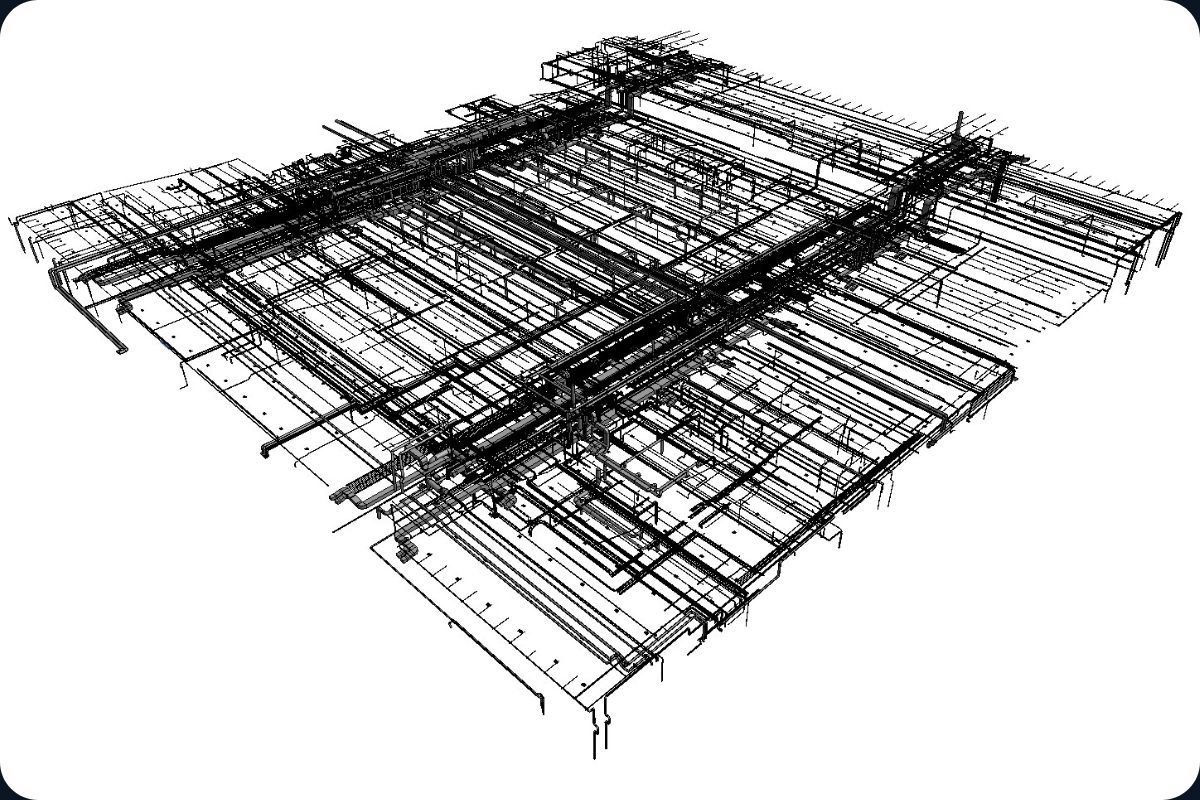
The plans and BIM deliverables (delivered in Revit .rvt, Navisworks .nwd, and IFC formats) allowed the engineering firm to integrate this data directly into their calculations and check the load-bearing capacity of the framework. This 3d building modeling workflow secures decision-making for future works: the client could verify the roof frame's exact portance and plan their solar project with absolute peace of mind.
What are the concrete benefits for your industrial production?
- Reduced shutdown duration: Minimal time spent on-site during technical audits, preventing reassembly delays.
- Lower scrap rates: Optimal compliance of the machine tools and structure layout ensures operational continuity.
- Certified safe interventions:
Fully MASE-certified operations for high-risk industrial environments (nuclear, petrochemical).